


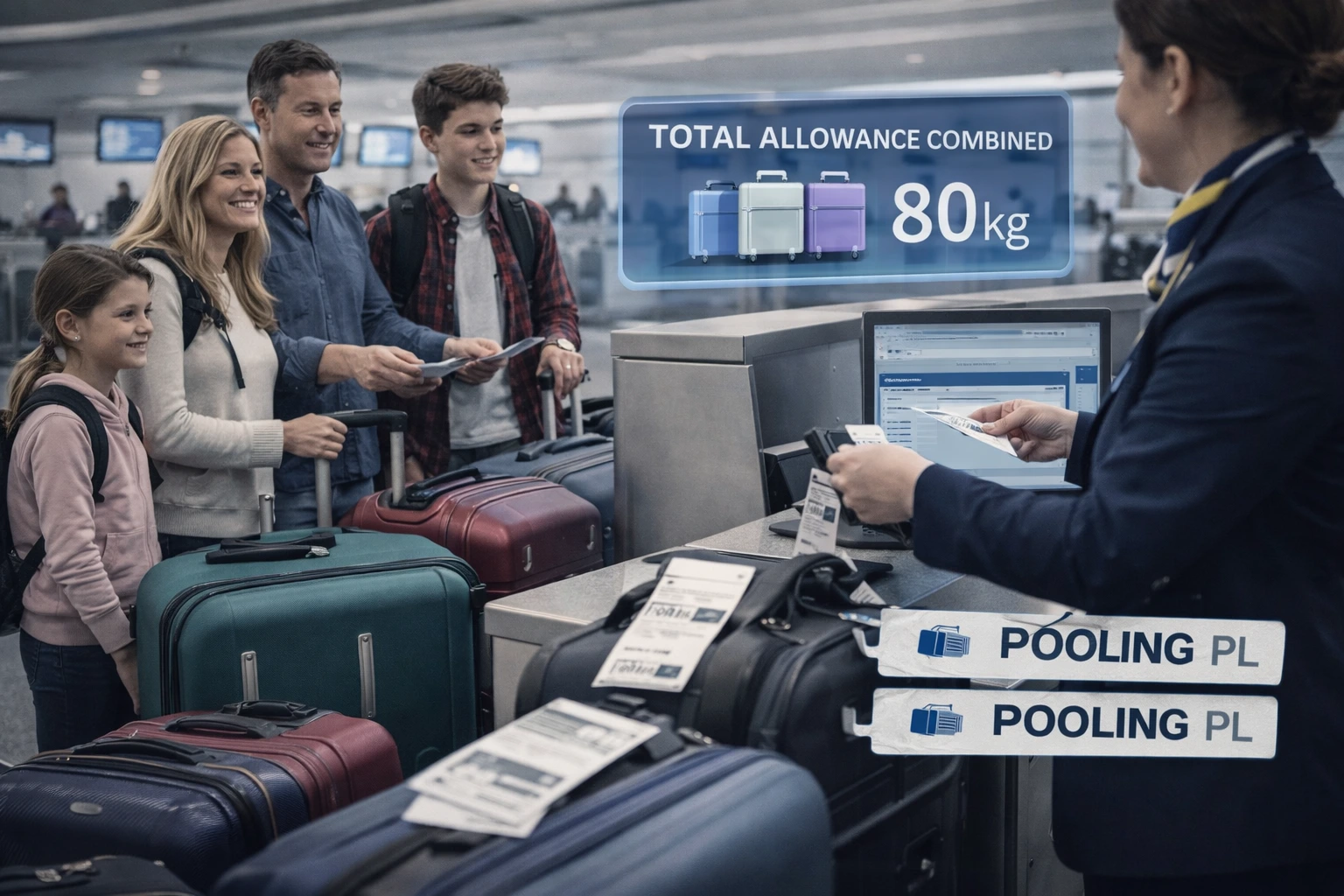
Pooling of Baggage (IATA Resolution 746) is an industry rule that allows two or more travelers on the same flight to combine their checked baggage allowances. In practice, when a group of passengers such as a family or tour group checks in together at the same time and place, they may pool their free baggage allowances into one combined total.
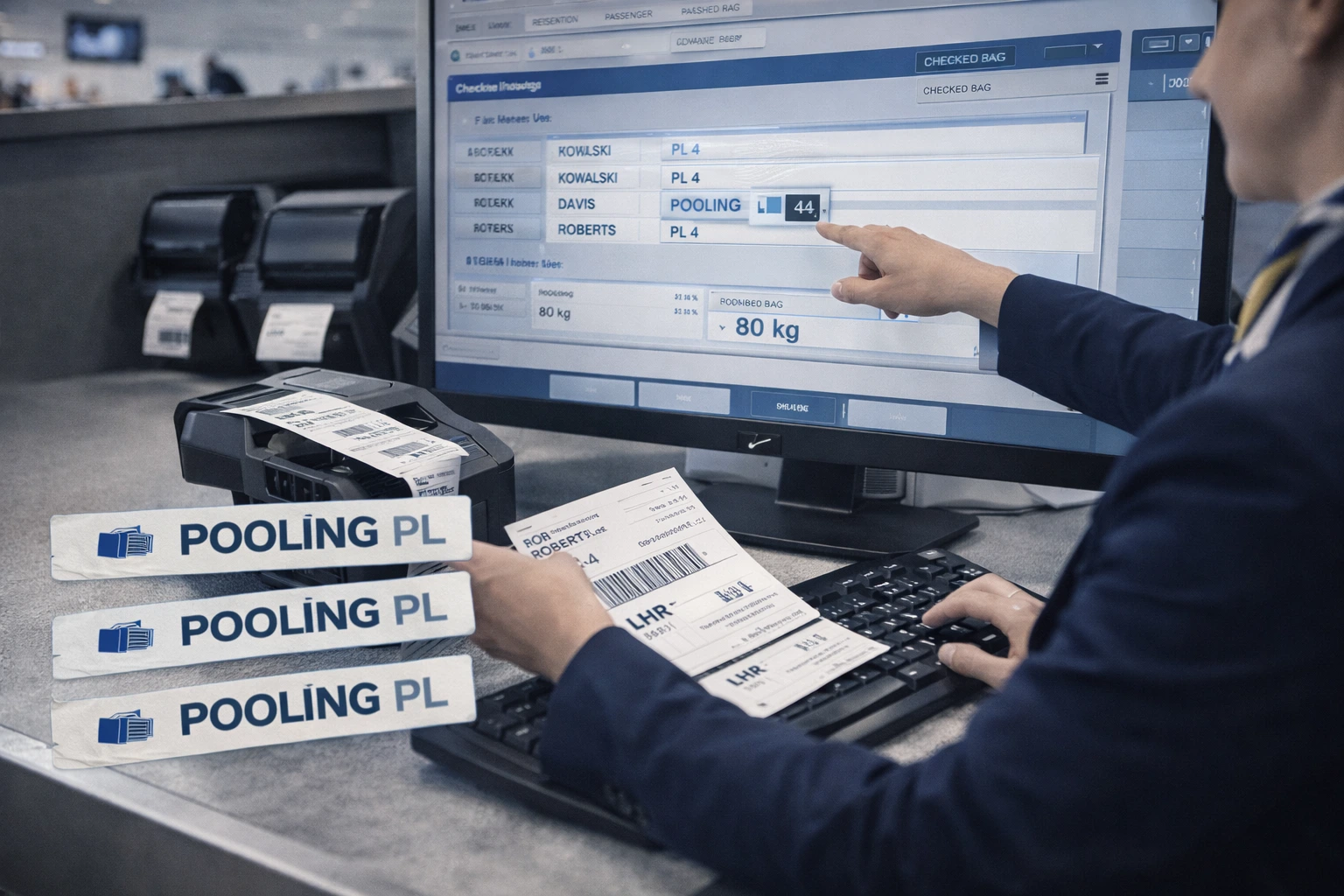
Under this rule, the lead passenger’s ticket is annotated with the total number of pieces and combined weight for the group, while each other passenger in the group is issued an individual baggage claim check marked with a pooling indicator. This ensures that while allowances are combined, accountability for each piece of baggage is maintained.
Pooling is designed as a practical balance between flexibility and control. It allows airlines to optimize baggage capacity while offering passengers greater convenience, without losing traceability of individual baggage items.
Origin and Publication
Resolution 746 was adopted by the IATA Passenger Services Conference and forms part of the global baggage standards applied across all member airlines. It is designated as a mandatory standard and remains in force indefinitely.
The resolution is included in the Passenger Services Conference Resolutions Manual, which defines the operational framework for passenger and baggage handling across the aviation industry. These standards ensure that all participating airlines apply consistent rules when handling baggage in interline and shared operations.
Since its adoption, the structure and intent of the resolution have remained stable, reflecting its continued relevance in modern airline operations.
Purpose and Content
The purpose of Resolution 746 is to standardize how baggage pooling is applied across airlines. It ensures that when passengers travel together, their combined baggage allowances are recognized and honored without requiring separate calculations for each individual.
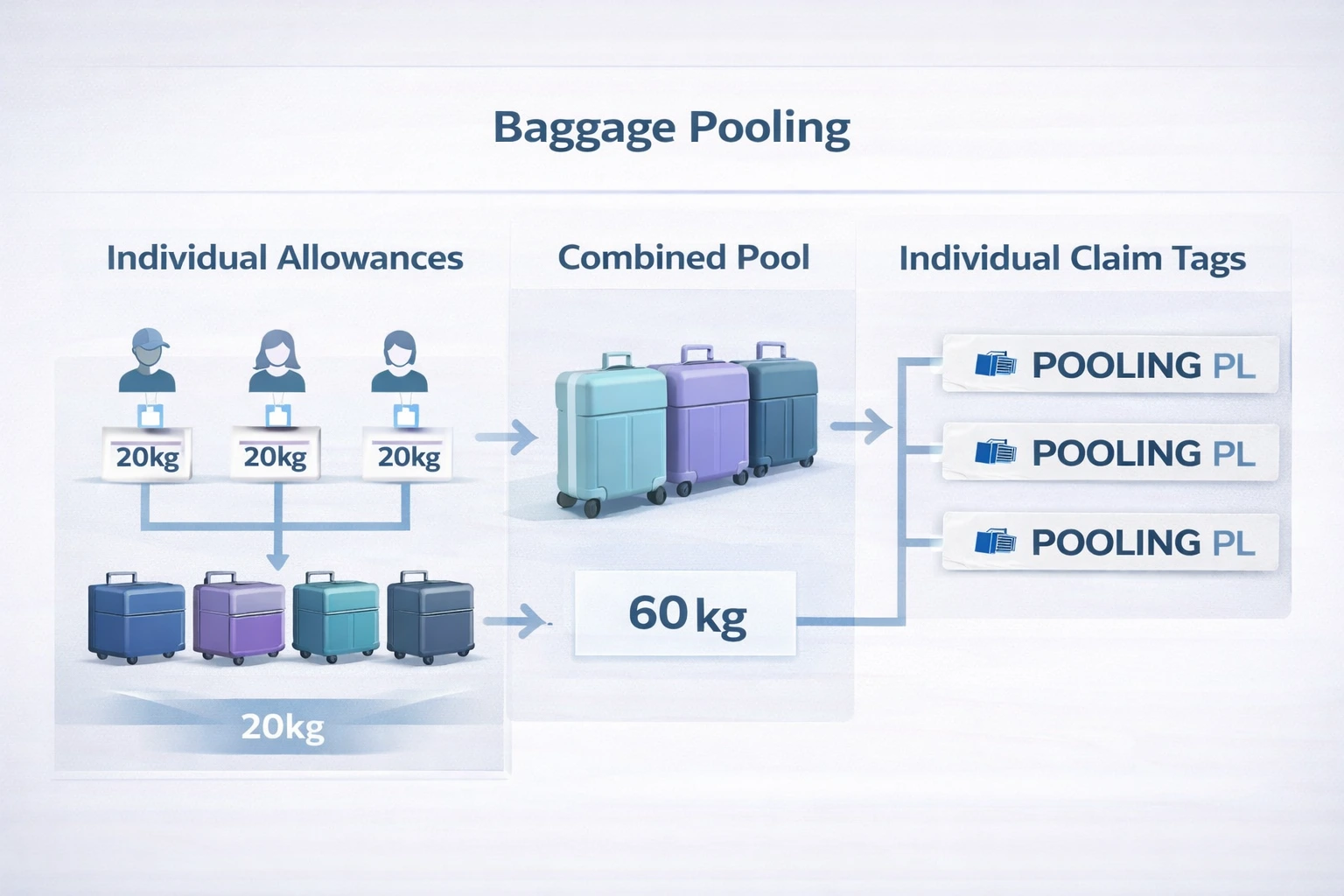
In practical terms, if multiple passengers each have a baggage allowance, those allowances can be combined into a single total. This total can then be distributed across the group’s baggage as needed.
However, the resolution maintains a critical requirement: each passenger must still receive an individual baggage claim check. This ensures that every bag remains linked to a specific traveler, supporting security and reconciliation processes.
This dual structure—combined allowance with individual accountability—is the core of the pooling concept.
Implementation Guidelines
Operational implementation of pooling relies on structured ticketing and baggage tagging procedures. At check-in, airline staff identify passengers traveling as a group and apply pooling rules if they present themselves together.
The lead passenger’s ticket is updated to reflect the total combined baggage allowance for the group. A pooling indicator is added to identify the arrangement.
For the remaining passengers, their tickets reference the lead passenger’s record, ensuring all baggage is linked within the same pooling group.
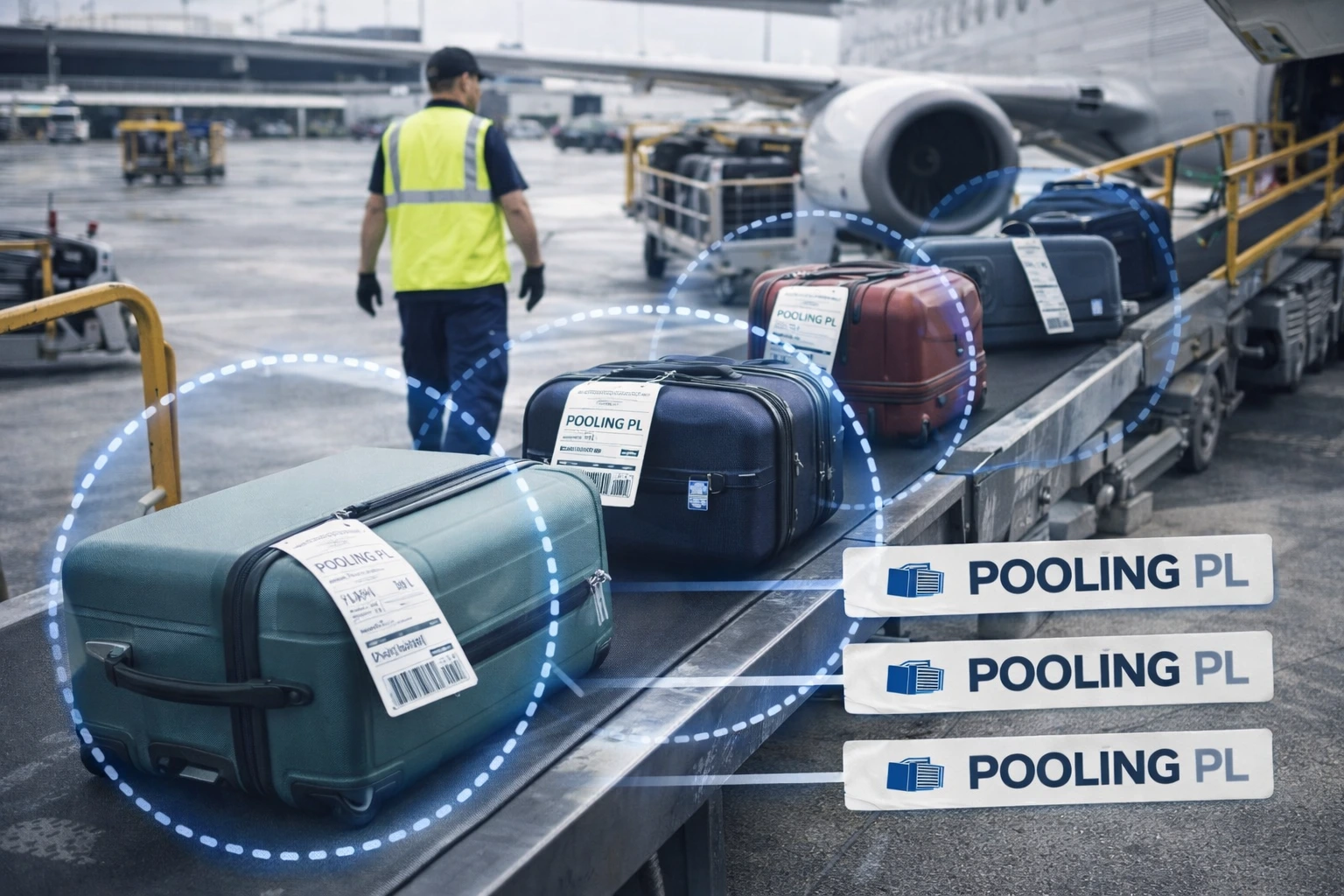
Each bag is then tagged individually, but the system records that the bags belong to a pooled allowance. This ensures compatibility with baggage handling systems across airlines.
Technical Structure
The technical structure of pooling is based on aggregation and traceability. Individual passenger allowances are combined into a single pooled total, while each piece of baggage remains individually identifiable through its tag and claim check.
This structure allows airlines to treat baggage collectively for allowance purposes while maintaining individual tracking for operational and security requirements.
Operational Benefits
Pooling of baggage provides several operational advantages. It allows airlines to use cargo space more efficiently by balancing baggage loads across flights and passengers.
For passengers, it offers flexibility, particularly for families and groups who may distribute their belongings unevenly across bags.
It also simplifies interline travel, as all participating airlines follow the same pooling rules, reducing confusion during transfers.
Additionally, pooling can reduce administrative complexity by minimizing individual excess baggage calculations within a group.
Auditability and Compliance
Resolution 746 is inherently auditable due to its reliance on ticket annotations and baggage tags. The pooling indicator and associated references provide a clear record of how allowances were applied.
Baggage reconciliation systems ensure that each passenger is associated with specific baggage items, even within a pooled group. This maintains compliance with security and tracking requirements.
Airlines can verify pooling arrangements through system logs, ticket data, and baggage handling records, ensuring consistent application of the rule.
Real-World Use Cases
Pooling is commonly used in family travel scenarios, where multiple passengers share a combined baggage allowance. For example, a family traveling together may distribute their luggage across several bags without exceeding their total allowance.
Tour groups and sports teams also benefit from pooling, as it allows large quantities of equipment or luggage to be managed efficiently.
In interline travel, pooling ensures that baggage can be transferred seamlessly between airlines, as all carriers recognize the same rules.
Operationally, pooling can also help airlines manage peak travel periods by optimizing baggage distribution across available capacity.
Conclusion
Resolution 746 establishes a practical and efficient approach to managing group baggage in aviation. By combining allowances while maintaining individual tracking, it balances flexibility with operational control.
Its standardized application across airlines ensures consistency, improves passenger experience, and enhances operational efficiency. In a global aviation system where coordination is essential, pooling of baggage remains a key mechanism for optimizing both service and performance.
