


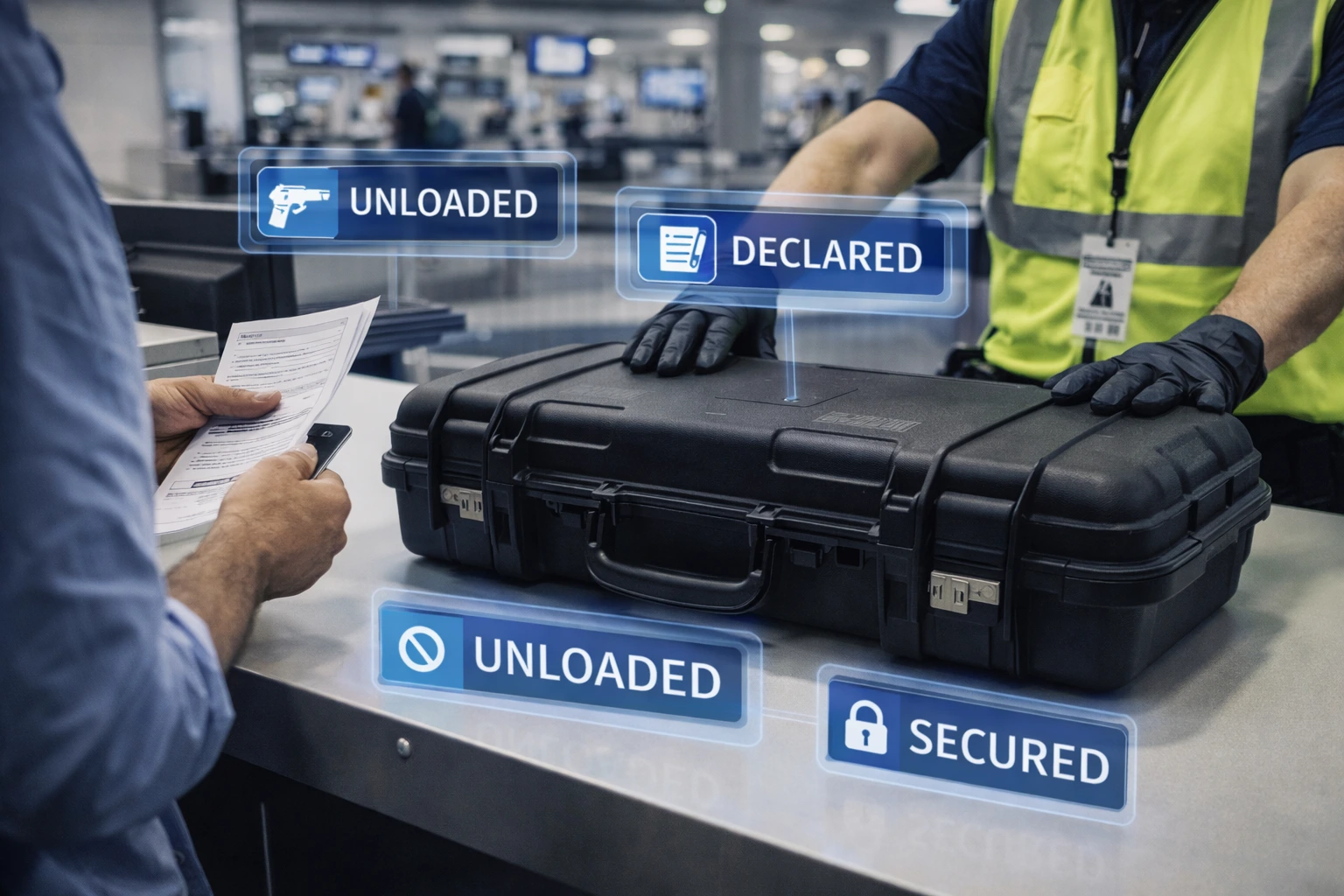
Resolution 745a is an IATA Passenger Services Conference baggage resolution titled Acceptance of Firearms and Other Weapons and Small Caliber Ammunition. It provides a standardized international policy for when and how checked baggage containing firearms, weapons, or ammunition may be accepted by airlines. In practice, Resolution 745a permits small arms and ammunition to travel in checked bags only if the items are properly declared, unloaded, and suitably packed, while prohibiting loaded or unauthorized weapons.
This means that a passenger travelling with a properly stowed hunting rifle or pistol, together with limited quantities of small-arms cartridges, may check the weapon as baggage under uniform rules that participating airlines recognize and apply. By working alongside dangerous goods rules and broader aviation security standards, Resolution 745a ensures that baggage containing firearms is handled in a predictable, secure, and internationally consistent way. It also ensures that safety procedures, including appropriate crew notification and controlled stowage, are followed throughout the baggage journey.
Origin and Adoption
Resolution 745a was adopted through the IATA Passenger Services Conference and forms part of the Passenger Services Conference Resolutions Manual. While the exact original adoption date and conference meeting are not publicly stated in the source material provided here, the resolution clearly appeared in industry baggage standards listings by the early 2010s and remains present in later Passenger Services Conference manuals. This confirms that it has been in force for years as part of the standard baggage framework used by IATA member airlines.
Like other IATA baggage resolutions, its text is maintained through Passenger Services Conference ballots and amendment processes. Those amendments generally refine definitions, clarify acceptance criteria, and keep the resolution aligned with dangerous goods and aviation security requirements. The current operational emphasis remains consistent: firearms in checked baggage are not treated as ordinary bags, but as specially controlled items that may only be accepted under defined conditions.
Structure and Key Provisions
The technical structure of Resolution 745a follows the pattern used in other IATA baggage resolutions. It contains a title, adoption history, amendment references, and numbered clauses setting out the conditions under which firearms, other weapons, and ammunition may be accepted as checked baggage. Its provisions distinguish clearly between items that are permitted under controlled conditions and items that remain prohibited.
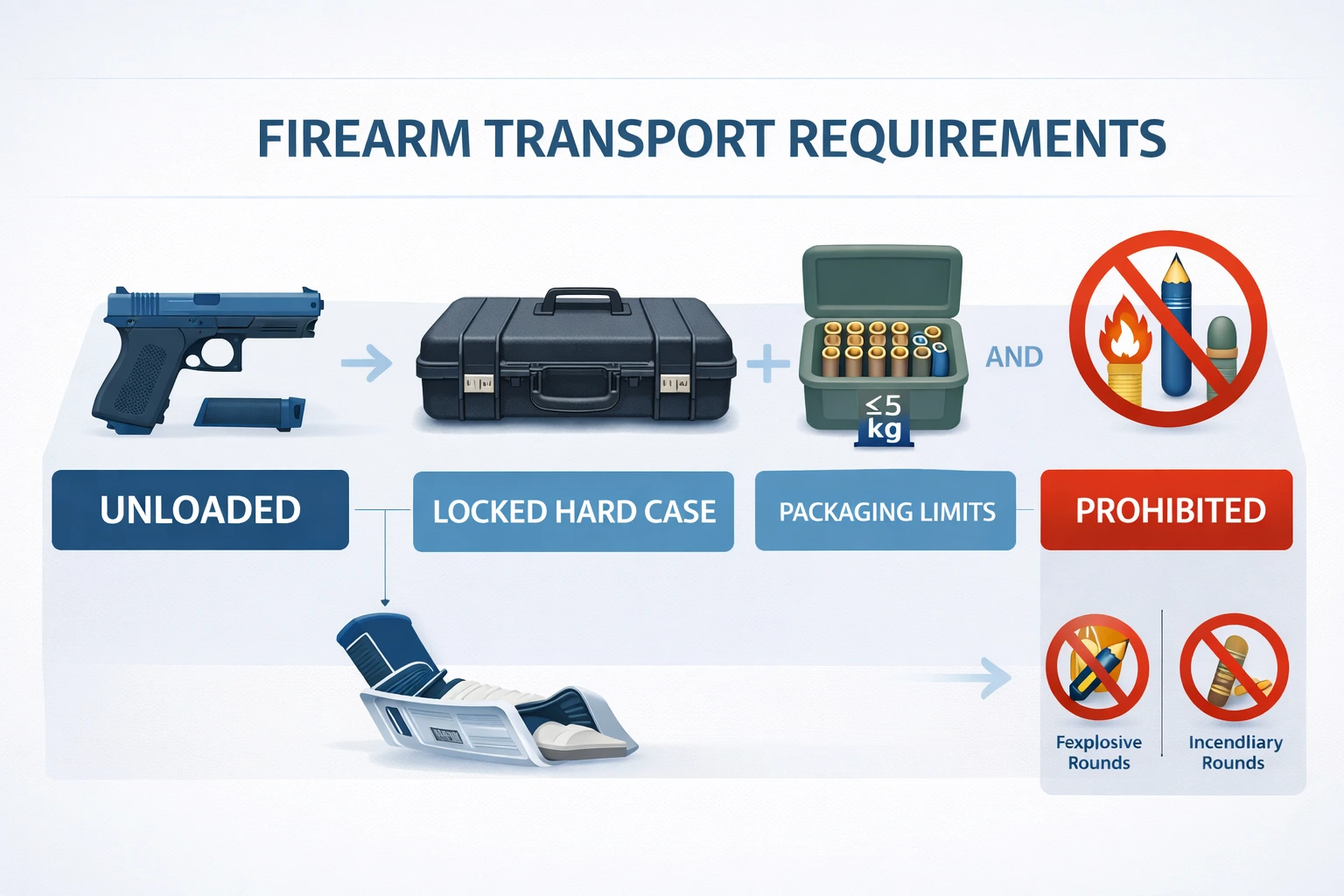
Under the resolution, firearms such as sporting rifles, shotguns, and pistols may be carried in checked baggage only if they are unloaded, locked in a hard-sided container, and properly declared to the carrier. Small-arms ammunition is permitted only in limited form and only when packed securely in accordance with the applicable standards. The rule limits ammunition to cartridges intended for small arms, carried for personal use, with a gross weight not exceeding 5 kilograms per person. Ammunition containing explosive or incendiary projectiles is excluded and therefore not acceptable under this resolution.
At the same time, the resolution makes clear that loaded firearms, undeclared weapons, and unauthorized or military-type items are not acceptable as passenger baggage. Larger or more dangerous munitions fall outside the scope of normal passenger baggage acceptance and are instead subject to dangerous goods controls. In that sense, Resolution 745a defines a narrow, highly controlled exception rather than a broad allowance.
- Permitted under strict conditions: unloaded sporting firearms, certain small arms, and limited quantities of small-caliber ammunition for personal use.
- Mandatory conditions: declaration at check-in, unloaded status, secure hard-sided case, suitable packing, and compliance with airline and regulatory procedures.
- Not permitted: loaded firearms, unauthorized weapons, explosive or incendiary ammunition, and items falling outside the accepted civilian sporting category.
Implementation Guidelines
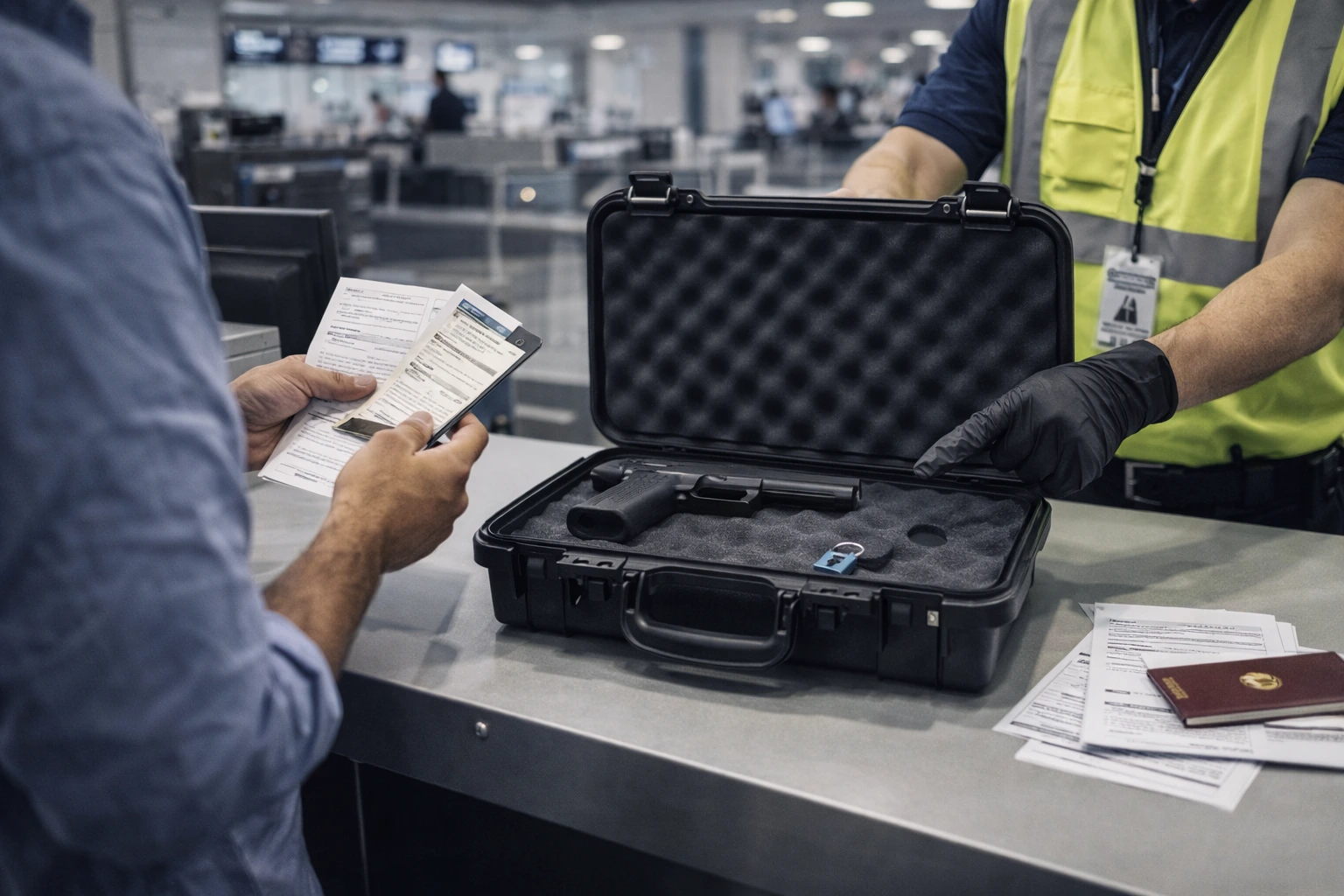
Implementation begins at check-in. Passengers must declare any firearm or ammunition they intend to place in checked baggage. Airlines normally require presentation of supporting documentation such as permits, licenses, or certificates where applicable. Ground staff then inspect the case and verify compliance with the acceptance requirements. The firearm must be unloaded, packed in a rigid and secure container, and locked. Ammunition must be packaged separately in the approved manner and must remain within the prescribed quantity limits.
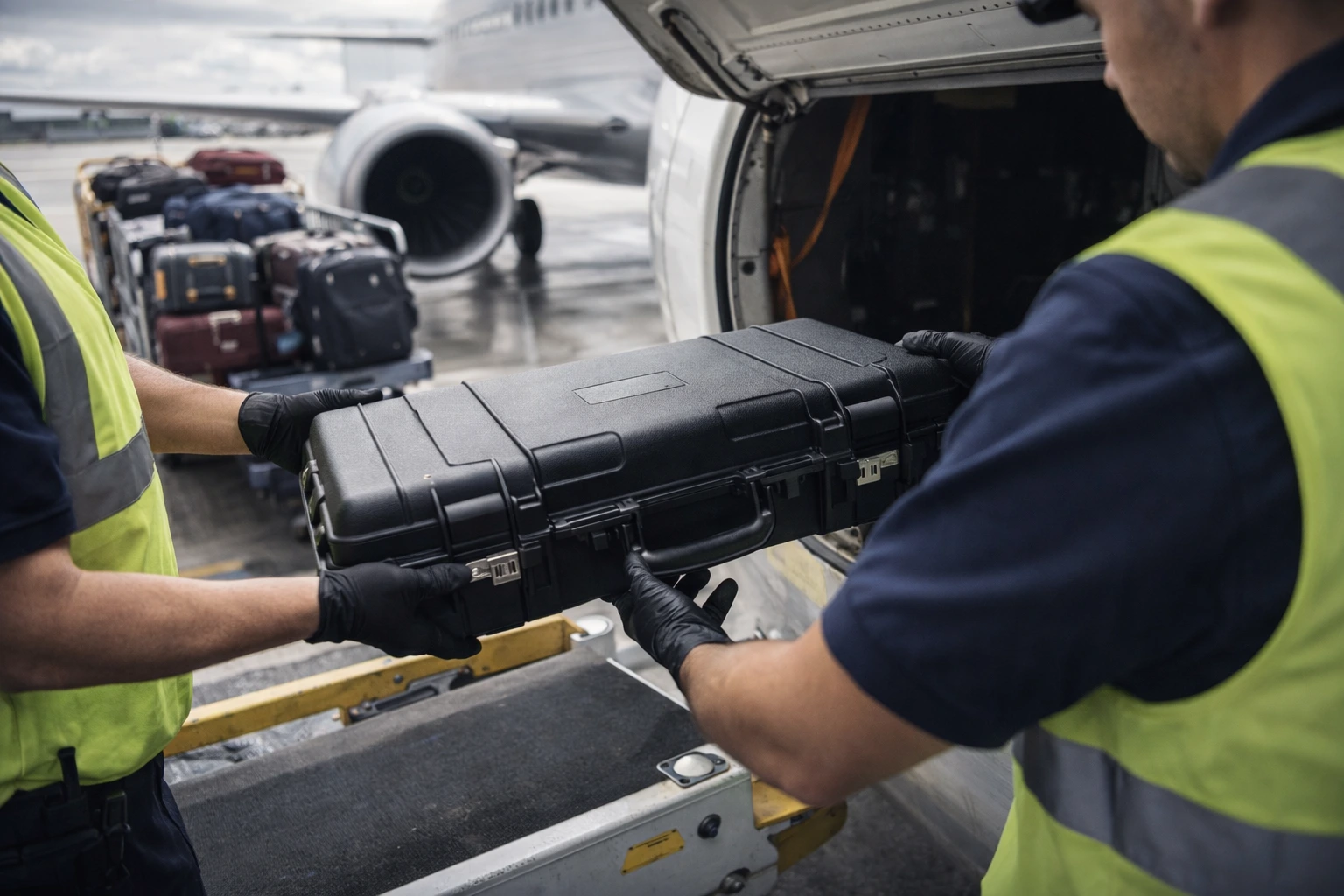
Once accepted, the baggage item is processed under controlled handling procedures. Depending on airline or airport practice, special notations, service codes, or handling identifiers may be used so the item is tracked properly within the baggage system. In interline travel, the baggage tag must remain aligned to the operating carrier’s flight and routing so that the firearm case follows the correct journey across carriers without confusion or repeated reprocessing at every transfer point.
Operationally, airlines also ensure that flight crew are informed of the presence and location of the accepted firearm baggage when required by procedure. This notification supports safety awareness and proper aircraft loading control. Ground handling staff must be trained to apply these rules correctly, since the acceptance of firearms in baggage is closely linked to dangerous goods awareness, baggage security, and regulatory compliance.
Permitted Items and Acceptance Conditions
The resolution’s practical value lies in its clear conditions for acceptance. An unloaded hunting rifle may be accepted when packed in a hard case, declared, and secured. An unloaded handgun may be accepted under the same basic conditions. Small-arms ammunition may also be accepted when it consists of the approved cartridge types, is packaged in a strong container, is carried for personal use, and does not exceed the weight limit established for the passenger.
By contrast, ammunition with explosive or incendiary projectiles is not allowed. Hand grenades, blast ammunition, and other military or dangerous goods items are outside the permitted scope and are therefore not acceptable in passenger baggage. Loaded weapons of any kind are also prohibited, since the resolution requires firearms to be unloaded before acceptance.
Core acceptance logic under Resolution 745a:
- Unload the firearm completely.
- Place it in a secure hard-sided locked case.
- Declare it to the airline at check-in.
- Package ammunition properly and remain within the allowed quantity.
- Exclude any explosive, incendiary, or otherwise prohibited ammunition.
- Ensure airline handling, notification, and tracking procedures are followed.
Benefits for Airlines and Industry
By establishing a common international standard, Resolution 745a gives airlines, airports, handlers, and passengers a single operational framework. One of the clearest benefits is interline consistency. A firearm baggage item accepted under the resolution can move between participating carriers with aligned expectations, reducing confusion and inconsistency across the journey. This is especially important for itineraries involving multiple airlines, where a lack of standardization would otherwise produce repeated denials, delays, or contradictory handling decisions.
The resolution also strengthens safety and regulatory alignment. Because it reflects the broader principles of aviation security and dangerous goods compliance, it helps airlines demonstrate that they are handling weapons and ammunition in a controlled and documented manner. That lowers operational risk and supports consistent application across stations and jurisdictions.
Operational efficiency improves as well. Clear standards reduce ad hoc decision-making at the check-in counter and create a more predictable process for staff training, baggage tracking, and loading procedures. For passengers who lawfully travel with sporting firearms or small-caliber ammunition, this means a more transparent and manageable airport experience. For airlines, it means lower complexity, fewer disputes, and smoother coordination between frontline, baggage, and security teams.
Auditability and Enforcement
Resolution 745a is highly auditable because its acceptance process is structured and document-based. Compliance can be verified through declaration records, inspection steps, baggage handling logs, training records, and any crew notification procedures that apply. Airlines typically integrate the rule into their operations manuals and station handling procedures, making it part of their broader compliance and safety oversight framework.
Audits may examine whether check-in agents verified unloaded status, whether ammunition quantities and types were compliant, whether the case was secure and hard-sided, and whether the baggage item was handled in accordance with the airline’s control procedures. Because the rule is standardized, compliance checks can be applied consistently across multiple stations and partner carriers. This creates a transparent chain of accountability from acceptance to loading and delivery.
Real-World Use Cases
A common real-world use case is sporting or hunting travel. A passenger flying internationally with a hunting rifle and a limited quantity of small-arms ammunition must declare the firearm, present the necessary documentation, and ensure both firearm and ammunition are packed according to the rule. Once accepted, the baggage can travel through the network under a predictable handling framework that participating carriers understand.
Another example involves interline journeys. A passenger travelling on a multi-sector itinerary with more than one airline benefits from the consistency of Resolution 745a because the baggage item is handled under harmonized conditions from origin to destination. That reduces the likelihood of inconsistent check-in decisions or improper transfer treatment between carriers.
Air shows, sporting events, and exhibition travel also illustrate the resolution’s value. Firearms or approved weapon-related items moved for lawful participation in such activities require predictable airline acceptance rules. Resolution 745a provides that predictability while maintaining the necessary safety controls.
Even in irregular operations, such as missed connections or temporary mishandling, the same controlled framework continues to apply. A declared firearm case that is delayed must remain secure, identifiable, and handled under the relevant control procedures until it is correctly rerouted or delivered.
Conclusion
Resolution 745a plays a critical role in aviation baggage operations by defining how firearms, other weapons, and small-caliber ammunition may be accepted in checked baggage under strict conditions. Its purpose is not to normalize weapon carriage, but to control it rigorously. Through declaration, secure packaging, ammunition limits, handling controls, and procedural consistency, it allows lawful transport while protecting passengers, crew, handlers, and aircraft.
Its significance lies in standardization. Airlines, airports, and passengers benefit from having a clear, shared international framework rather than a patchwork of conflicting local practices. In practical terms, Resolution 745a makes the transport of declared firearms in checked baggage safer, more predictable, and more auditable across the global aviation system.
