


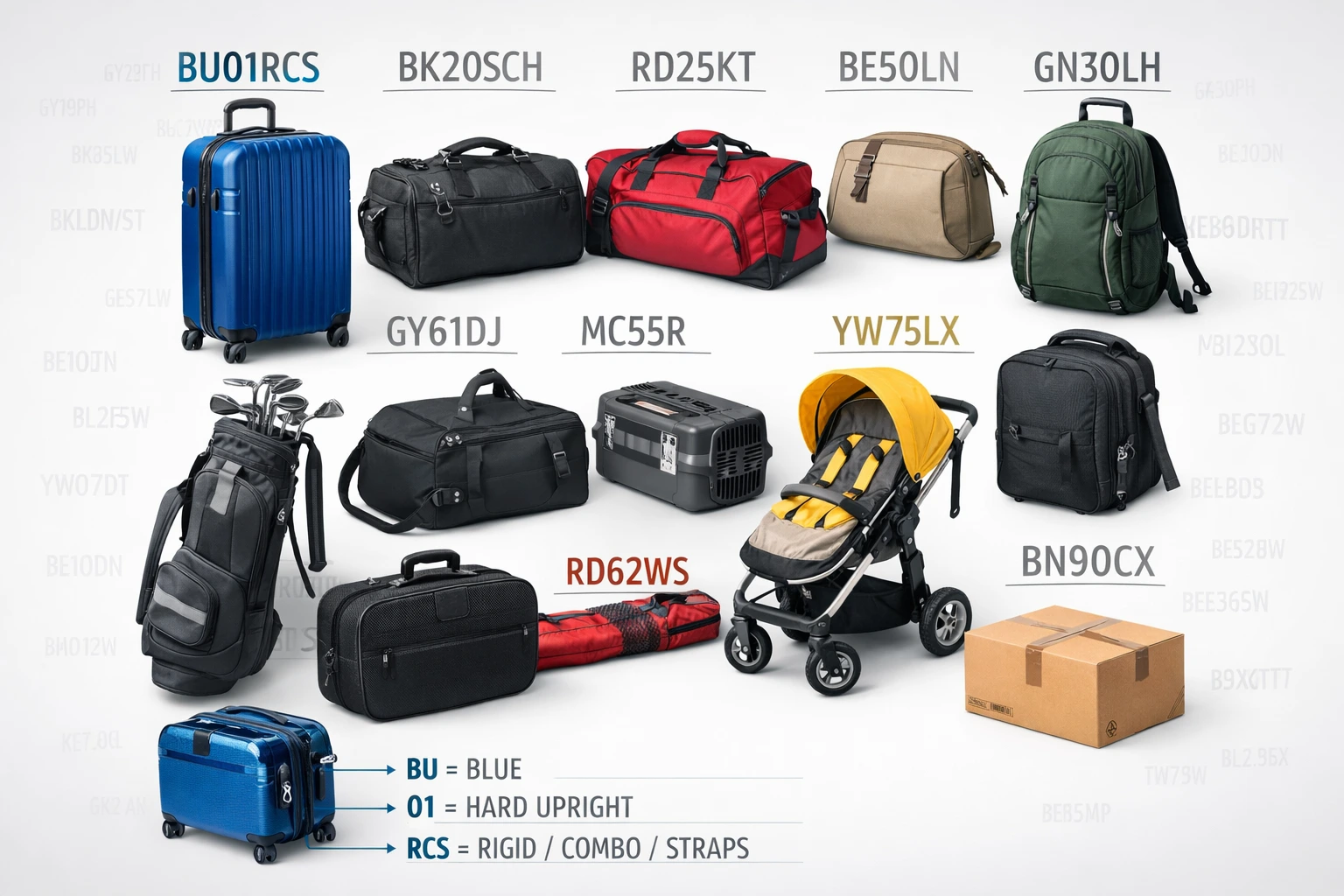
Resolution 743b defines one of the most critical yet often overlooked standards in global baggage operations: the Baggage Identification Chart. This standardized system provides a universal method for describing baggage using structured codes based on type, color, and physical characteristics.
The chart ensures that all airlines, airports, and ground handlers describe baggage in exactly the same way, eliminating ambiguity and enabling efficient communication across international operations. It acts as a shared operational language, allowing a bag described in one location to be accurately identified in another without confusion.
In practice, this standard is used in lost-and-found offices, tracing systems, and interline baggage communication, forming a core part of how mishandled baggage is identified and recovered globally.
Origin and Adoption
Resolution 743b was adopted by the IATA Passenger Services Conference as a mandatory industry standard. It forms part of a broader framework of baggage handling resolutions that govern how baggage is described, tracked, and managed across airline networks.
The resolution remains active with indefinite validity and continues to be applied globally without significant structural changes. Its durability reflects its effectiveness in solving a fundamental operational challenge: ensuring that baggage descriptions are consistent and universally understood.
The Baggage Identification Chart itself is maintained as an official attachment to the resolution and is distributed in both physical and digital formats for operational use.
Purpose
The primary purpose of Resolution 743b is to standardize how baggage is described across all airline systems and communications. Without such a standard, descriptions of lost or found baggage could vary significantly between locations, leading to delays, errors, and inefficiencies.
By introducing a coded system, the resolution ensures that baggage descriptions are concise, accurate, and universally interpretable. A single code can convey multiple attributes, including the bag’s color, structure, and external features.
This standardization significantly improves the speed and accuracy of baggage tracing and recovery, particularly in interline scenarios involving multiple airlines.
Technical Structure of the Chart
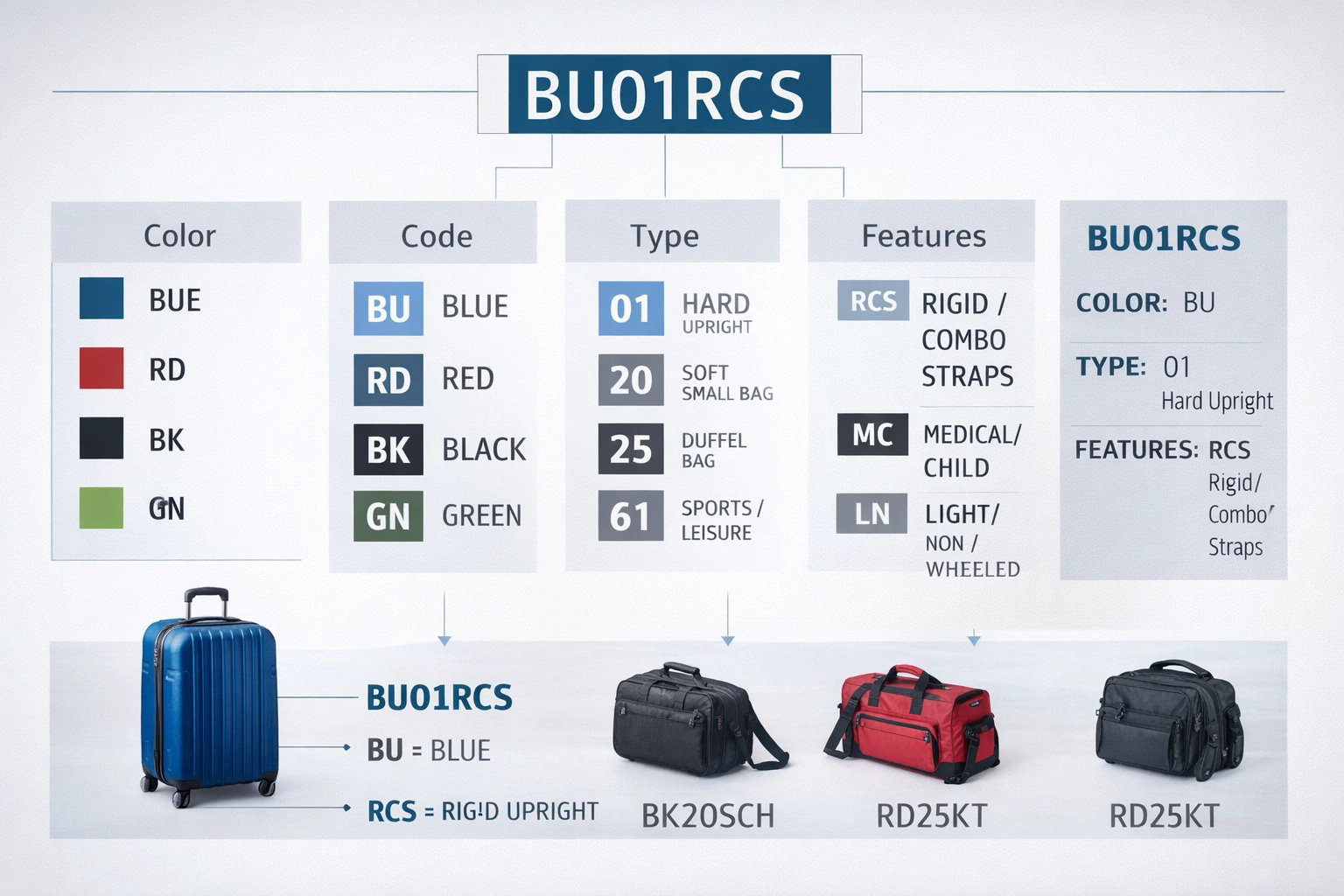
The Baggage Identification Chart is structured into three main components: color codes, baggage type codes, and descriptive elements. These components are combined to create a single standardized identifier for each piece of baggage.
Color codes define the primary visual appearance of the bag, using abbreviations such as BK for black, BU for blue, RD for red, and others. These codes ensure consistency in how color is described across all systems.
Baggage type codes classify the physical structure of the bag, distinguishing between categories such as hard-shell suitcases, soft bags, duffel bags, backpacks, and specialized items. These are grouped into logical ranges, allowing for structured categorization.
Descriptive elements provide additional detail about the bag’s material, size, and external features. These may include indicators for wheels, straps, handles, locks, and construction type.
When combined, these elements form a complete code that uniquely describes a bag. For example, a code such as BU01RCS represents a blue hard-shell upright suitcase with specific structural features.
Implementation Guidelines
Airlines and ground handling teams are required to use the Baggage Identification Chart in all baggage-related communications, particularly in tracing and reporting systems. Staff are trained to select the appropriate codes when describing baggage in operational workflows.
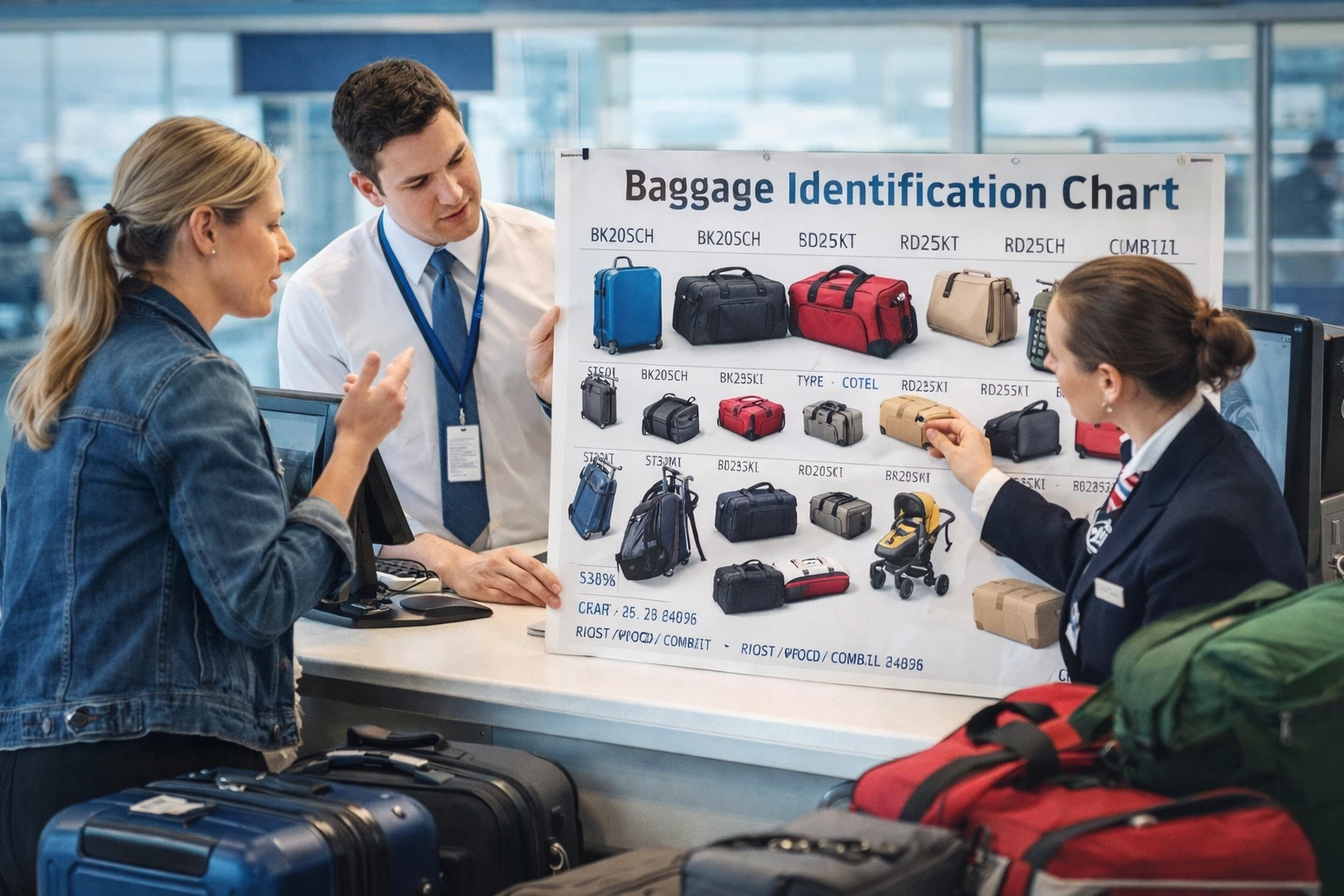
The chart is made available at key operational points, including lost-and-found counters, baggage service offices, and operations control centers. It is also integrated into digital baggage tracing systems, allowing users to select codes directly through software interfaces.
Updates to the chart are controlled and infrequent, ensuring stability while allowing for the introduction of new baggage types or features when necessary.
Benefits for Airlines
Resolution 743b delivers significant operational benefits. By standardizing baggage descriptions, it eliminates ambiguity and reduces the risk of misidentification. This leads to faster baggage tracing, improved coordination between airlines, and more efficient handling processes.
The use of standardized codes also enables automation within baggage tracking systems. Codes can be easily processed, stored, and transmitted, supporting digital workflows and reducing manual errors.
Additionally, the chart improves communication with passengers by enabling clearer and more consistent descriptions of baggage during reporting and recovery processes.
Auditability and Compliance
The use of standardized codes makes Resolution 743b highly auditable. Airlines can verify compliance by reviewing baggage reports and tracing records to ensure that chart codes are used consistently.
This structured approach creates a clear audit trail, allowing organizations to monitor performance, identify gaps, and maintain alignment with industry standards.
Real-World Use Cases
In daily operations, the Baggage Identification Chart is used extensively in lost baggage reporting and recovery. When a passenger reports missing luggage, staff use the chart to translate the passenger’s description into a standardized code.
This code is then entered into the baggage tracing system, where it can be matched against found baggage records across multiple locations. Because all airlines use the same coding system, the chances of successfully matching and recovering the bag are significantly increased.
The chart is also used in interline communication, ensuring that baggage descriptions remain consistent when bags are transferred between airlines.

Conclusion
Resolution 743b provides a universal language for describing baggage, ensuring clarity and consistency across global airline operations. By combining structured coding with standardized processes, it transforms how baggage is identified, tracked, and recovered.
Its impact is both operational and practical. Airlines benefit from improved efficiency and reduced errors, while passengers experience faster and more reliable baggage recovery. In a complex interline environment, Resolution 743b ensures that every bag can be clearly understood, no matter where it is in the world.
