


Recommended Practice 1701o (Passenger Services Conference, IATA), also known as Contactless Travel under the One ID programme, is the industry recommended practice that enables passengers to use biometric recognition for identity verification throughout the airport process while fully respecting privacy and protecting personal data. It became effective in October 2023 and was published in the Passenger Services Conference Resolutions Manual in June 2024. It is classified as Type B with indefinite expiry.
RP 1701o forms one of the two core pillars of IATA’s One ID initiative (the other being RP 1701p – Digitalization of Admissibility). Together they aim to deliver an end-to-end passenger experience that is contactless, secure, seamless, and efficient.
Origin, Status, and Relationship to Other Standards
One ID originated as an industry response to repetitive document presentation, long queues, and the operational strain of paper-based identity checks. The COVID-19 pandemic accelerated the need for digital solutions. RP 1701o consolidates and defines the Contactless Travel component, building on earlier self-service and data-harmonisation practices (including RP 1701d Self-Service Electronic Document Check and RP 1701a Passenger Data Harmonization).
It sits within the RP 1701 End to End Passenger Process family and is complemented by:
- RP 1701p Digitalization of Admissibility (pre-travel digital proof of documents and authorisations).
- The One ID Handbook and One ID Glossary.
- Open technical standards, particularly the W3C Verifiable Credentials Data Model, Decentralized Identifiers (DIDs), ISO, and OpenID frameworks.
- ICAO work on Digital Travel Credentials (DTCs) and Digital Travel Authorizations.
- Supporting tools such as the IATA Contactless Travel Directory.
The practice is recommended (Type B). Implementation must also comply with applicable domestic, regional, and international data-protection and biometric regulations.
Purpose and Scope
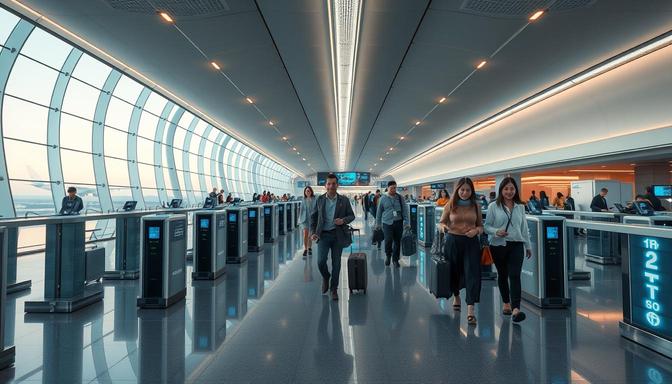
The purpose of RP 1701o is to enable passengers to share a live biometric image (typically a facial biometric) and relevant journey information in advance, so that they can pass through airport touchpoints—bag drop, security access, lounge access, boarding, and potentially immigration or other checkpoints—without repeatedly presenting physical identity or travel documents. This allows movement through the airport at walking pace while maintaining strong identity assurance.
Scope covers the processes, data-sharing principles, biometric recognition, privacy controls, and interoperability requirements needed for contactless identity verification at physical airport touchpoints. It applies to both dedicated airline processes and multi-stakeholder (airline–airport–authority) environments. Passengers retain the ability to opt for traditional manual processing or to opt out of biometric processing at any stage.
Core Concepts and Technical Principles
Passenger-centric digital identity
Passengers maintain control over their data. They provide informed consent before any sharing occurs. Relying parties (airlines, airports, authorities) request only the minimum data necessary for the specific transaction (data minimisation / selective disclosure).
Biometric recognition
A live facial biometric (or other approved modality) is used to match the passenger at each contactless touchpoint against a previously enrolled or shared biometric template or verifiable credential. Once identity is confirmed, the passenger can proceed without presenting a physical passport or boarding pass.
Advance sharing
Passengers can share required biometric and journey data from a digital wallet directly to the relying party in advance of travel. The relying party verifies authenticity and prepares the contactless journey.
Open trust framework
IATA promotes an open, interoperable trust framework based on W3C Verifiable Credentials. Credentials are tamper-evident and more trustworthy than physical counterparts. Examples include biographic and biometric data derived from a passport, flight details, and other travel-related claims.
Interoperability
Standards support multi-carrier and multi-wallet journeys. Proofs of Concept have demonstrated successful use of diverse digital wallets (including Apple Wallet, Google Wallet, national programmes such as India’s Digi Yatra, airline wallets, and open-source solutions) across different airlines and airports.
Process Overview
- Passenger obtains or creates a trusted digital identity / biometric credential (State-issued Digital Travel Credential preferred; self-derived or third-party credentials usable at non-government touchpoints).
- Passenger consents to share the live biometric image and necessary journey information with the relevant relying parties.
- Relying party verifies the authenticity of the credential and prepares the contactless process.
- At each airport touchpoint the passenger is identified by biometric recognition.
- Upon successful match the passenger proceeds without presenting physical documents.
- The passenger may revoke consent or opt out at any time.
Implementation Considerations
Airlines and airports implementing RP 1701o typically:
- Integrate biometric capture and matching engines at relevant touchpoints (bag drop, security, boarding gates, etc.).
- Support digital-wallet presentation of verifiable credentials.
- Ensure robust consent management and audit trails.
- Align with data-protection requirements (purpose limitation, retention limits, security of biometric data).
- Use the IATA Contactless Travel Directory to identify participating airports and eligibility rules.
- Provide clear passenger information and fallback to traditional document presentation.
- Coordinate with interline partners for multi-carrier continuity.
Proofs of Concept conducted under the IATA Strategic Partnerships Program (including live multi-airport, multi-carrier, multi-wallet trials) have confirmed technical readiness and interoperability.
Benefits
Passengers
- Elimination of repetitive document presentation.
- Shorter queues and reduced waiting times.
- Ability to move through the airport at walking pace.
- Stronger privacy control through consent and selective disclosure.
- Option to retain traditional processing.
Airlines and Airports
- Improved staff productivity and automation.
- Reduced fraud risk through strong biometric matching.
- Higher throughput at constrained touchpoints.
- Better passenger satisfaction and readiness for growth in traffic volumes.
Governments / Authorities
- Potential for stronger identity assurance when integrated with official Digital Travel Credentials.
- Facilitation benefits for low-risk, pre-verified travellers.
Relationship to RP 1701p and the Broader One ID Vision
RP 1701o focuses on the on-airport contactless experience. RP 1701p (Digitalization of Admissibility) addresses the pre-travel phase in which the passenger digitally demonstrates possession of all required documents and authorisations, enabling remote check-in and arrival at the airport “Ready to Fly.” The two practices are complementary: successful digitalisation of admissibility feeds clean, pre-validated identity into the contactless airport process defined by RP 1701o.
The overall One ID vision is a passenger-centric, paperless journey from booking to arrival in which identity and admissibility are validated early and biometrics replace repetitive physical checks.
Conclusion
Recommended Practice 1701o – Contactless Travel provides the industry standard for biometric-enabled, privacy-protective identity verification at airport touchpoints. By enabling advance sharing of biometric and journey data under passenger control, supporting open verifiable-credential frameworks, and requiring only minimum necessary disclosure, it removes the need for repeated physical document presentation and allows passengers to move through the airport at walking pace. When implemented in conjunction with RP 1701p and supporting technical standards, it forms a cornerstone of the modern, seamless, and secure passenger experience envisioned by One ID.
Sources include official IATA One ID documentation, the Passenger Services Conference Resolutions Manual listings, IATA fact sheets on Contactless Travel and Verifiable Credentials, Proof-of-Concept results, and related ICAO digital-travel-credential work. Full proprietary text of the Recommended Practice is contained in the IATA Passenger Services Conference Resolutions Manual.
