



Resolution 743 is an IATA Passenger Services Conference (PSC) binding standard governing found or unclaimed checked baggage. It is codified in the IATA Passenger Services Conference Resolutions Manual (PSCRM), which contains all resolutions and recommended practices for baggage handling processes. In the PSCRM, Resolution 743 is listed as “Found and Unclaimed Checked Baggage.” By IATA convention, resolutions like 743 are Type B (mandatory) provisions adopted by PSC votes and uniformly enforced by member airlines.
In practical terms, Resolution 743 outlines the responsibility and procedures for baggage that arrives at an airport but goes unclaimed or cannot be delivered because the owner is unknown. Under this resolution, airlines and airports must agree, typically through a local baggage committee, on standardized steps to catalogue, secure, and repatriate found bags, ensuring no baggage is left unmanaged or indefinitely stored.
Origin and Publication
Resolution 743 was first adopted by IATA’s Passenger Services Conference at its 31st meeting, referenced as PSC (31) 743. Since its original adoption, it has been updated only through formal amendment ballots issued to member airlines. Companion resolutions such as 743a, 743b, and 743c were later introduced to address related operational aspects including forwarding mishandled baggage, identification charts, and on-hand baggage summary tagging.
Each update is incorporated into subsequent editions of the Passenger Services Conference Resolutions Manual. In practice, airlines track these updates through amendment histories within the manual, ensuring operational alignment with the latest standards.
Core Process Flow
Resolution 743 defines a structured, time-bound workflow for handling found and unclaimed baggage. The process ensures consistency across all airlines and airports.
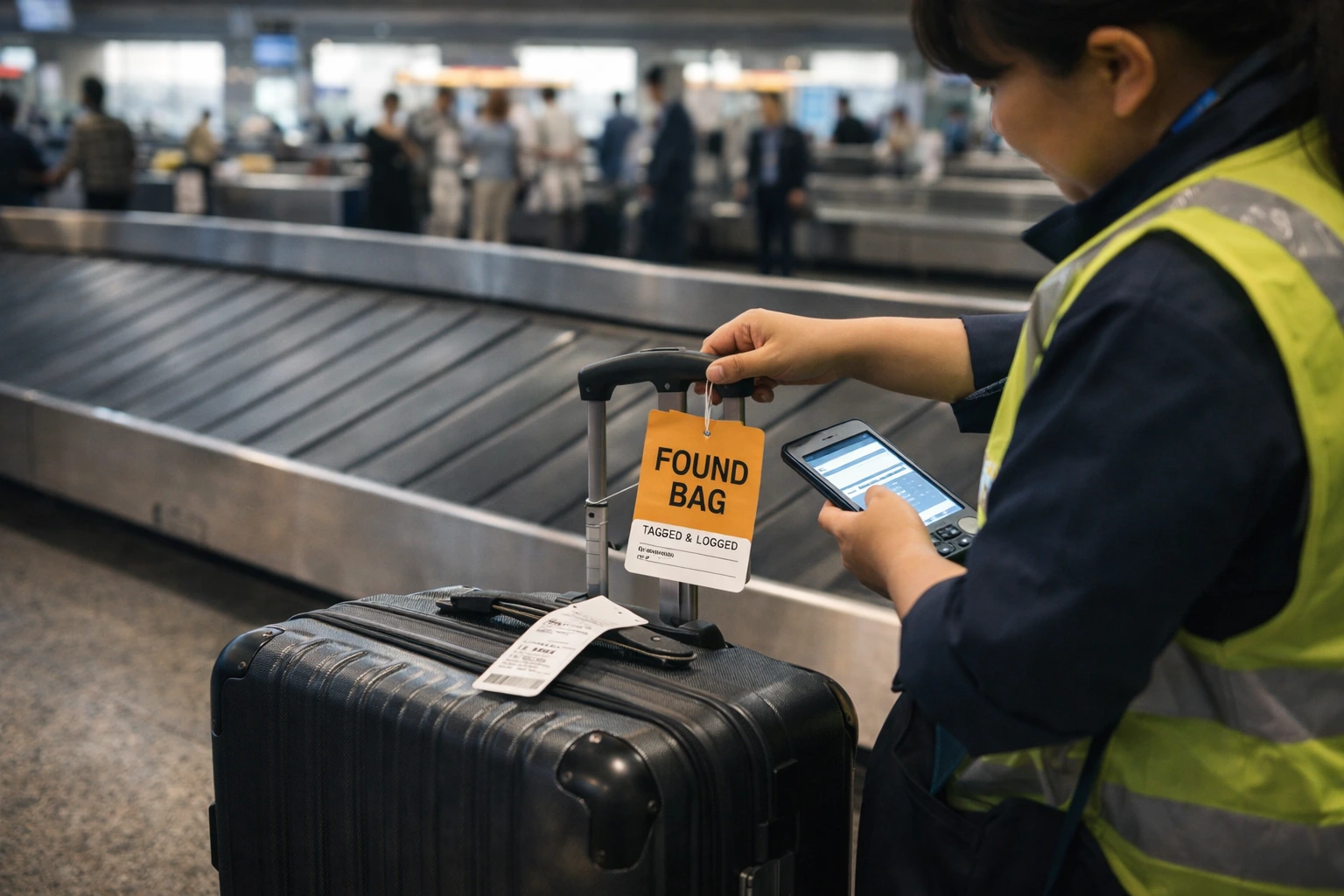
- Identification of Found Baggage: Any airline or handler discovering unattended baggage must tag it as found and record its details immediately.
- Enter Tracing Message: A standard “Found Bag” message must be entered into the global baggage tracing system within hours.
- Local Baggage Committee Notification: The discovery is reported to the airport’s baggage committee to apply local handling policies.
- Search for Owner: Airlines attempt to identify the owner using passenger records, PNR data, and available information.
- On-hand Reporting: If unclaimed after 120 hours, an On Hand Baggage (OHD) message must be sent or the bag transferred to a central tracing office.
- Extended Disposal or Auction: If still unclaimed after the legal holding period, disposal or auction follows local regulations.
Resolution 743 transforms unclaimed baggage from a liability into a controlled operational process.
Purpose
The primary purpose of Resolution 743 is to prevent found baggage from being left unmanaged. By enforcing immediate cataloguing, messaging, and storage procedures, the resolution ensures that every bag is tracked and handled systematically.
This structured approach reduces operational cost, minimizes delays, and improves passenger outcomes. It also ensures compliance with international liability frameworks, where airlines remain responsible for baggage even when ownership is initially unclear.
For passengers, this provides assurance that found baggage will be traced and managed through a global system rather than being discarded or ignored.
Technical Structure
Resolution 743 is structured as a PSC Type B standard with defined procedures and technical attachments. It includes message formats, definitions, and required actions for airlines.
A key requirement is the immediate entry of standardized messages into the baggage tracing system using prescribed formats. These messages ensure that all airline systems and interline partners are aware of the baggage status.
The resolution also introduces a critical time-based trigger: if baggage remains unclaimed after 120 hours, it must be classified as on-hand and reported accordingly. This ensures consistent escalation and prevents indefinite storage at local stations.

Implementation Guidelines
Airlines implement Resolution 743 through ground operations procedures and coordination with airport authorities. Staff are trained to identify found baggage, apply tags, log details, and initiate tracing messages immediately.
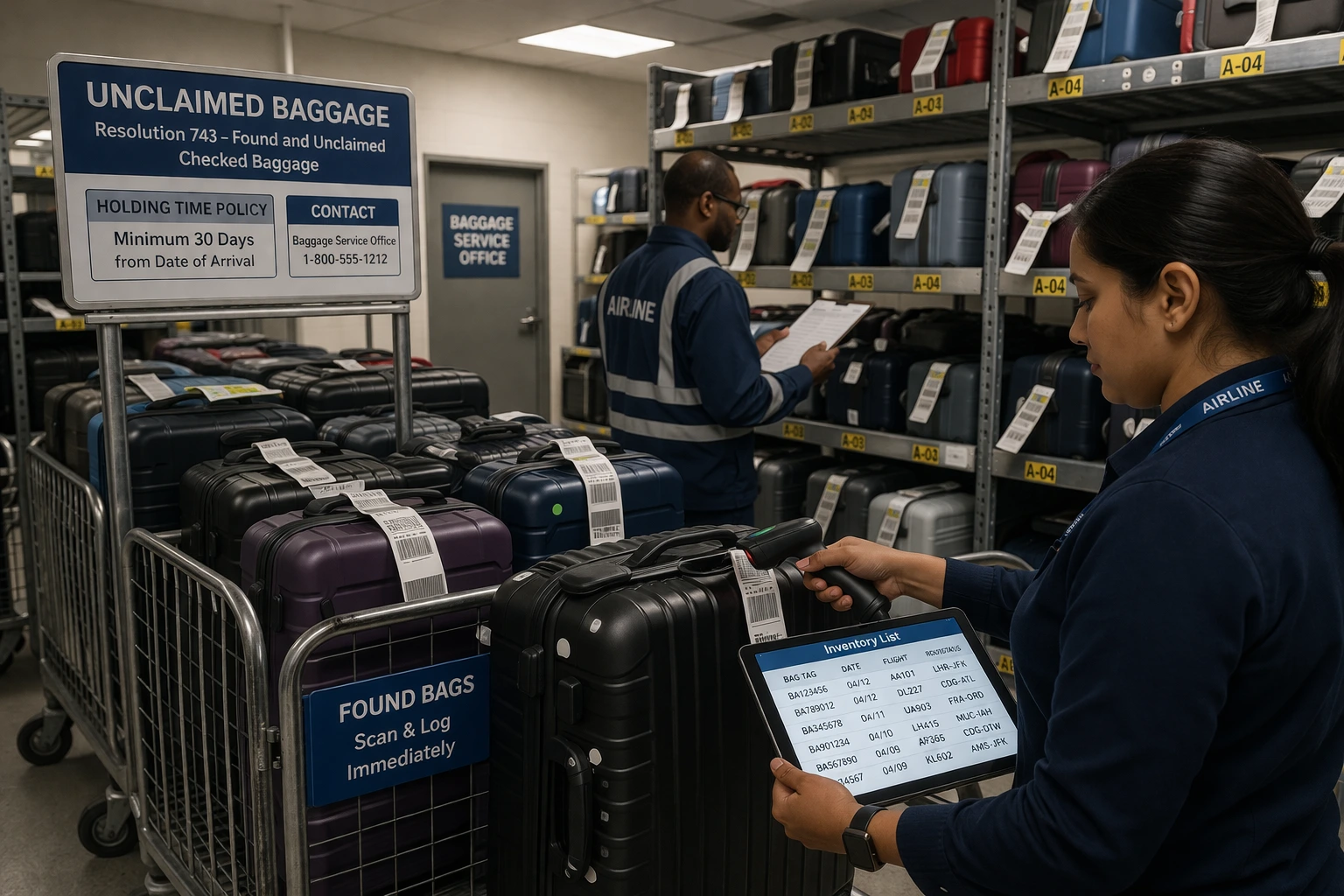
Found baggage is typically stored in secure designated areas such as baggage service offices or controlled storage rooms. Local baggage committees define holding periods and disposal procedures based on regulatory requirements.
Operational workflows also include attempts to contact passengers once a potential match is identified, ensuring timely return of baggage whenever possible.
Benefits for Airlines
Adhering to Resolution 743 reduces the cost of lost baggage by improving recovery rates and minimizing compensation claims. It also provides a standardized approach that reduces disputes between airlines in interline scenarios.
The use of global tracing systems ensures transparency and creates a consistent operational framework. Airlines benefit from improved efficiency, reduced delays, and stronger compliance with industry standards.
Additionally, the structured process provides a clear audit trail, supporting regulatory checks and internal performance monitoring.
Auditability
Resolution 743 is highly auditable due to its reliance on standardized messaging and defined procedures. Every action, from initial identification to final disposition, is logged within baggage tracing systems.
Airlines can demonstrate compliance by showing message timestamps, storage records, and handling logs. This transparency supports both regulatory oversight and operational accountability.
Real-World Use Cases
Resolution 743 is applied daily across global airports. When baggage arrives without a passenger to claim it, airlines immediately tag, log, and trace the bag. If a passenger later reports missing baggage, the system can quickly identify its location through stored records.
In large hub airports, unclaimed baggage is securely stored and systematically processed. At smaller airports, the same principles apply, ensuring consistency regardless of infrastructure.
After the defined holding period, unclaimed baggage may be disposed of or auctioned according to local regulations, ensuring operational closure.
Summary
Resolution 743 establishes a global standard for managing found and unclaimed baggage. By requiring immediate identification, standardized messaging, and structured handling procedures, it ensures that no baggage is left unmanaged.
Its strength lies in its consistency and accountability. Every found bag enters a controlled system, every action is recorded, and every outcome is governed by clear procedures. In doing so, Resolution 743 transforms a potential operational risk into a predictable and manageable process.
