



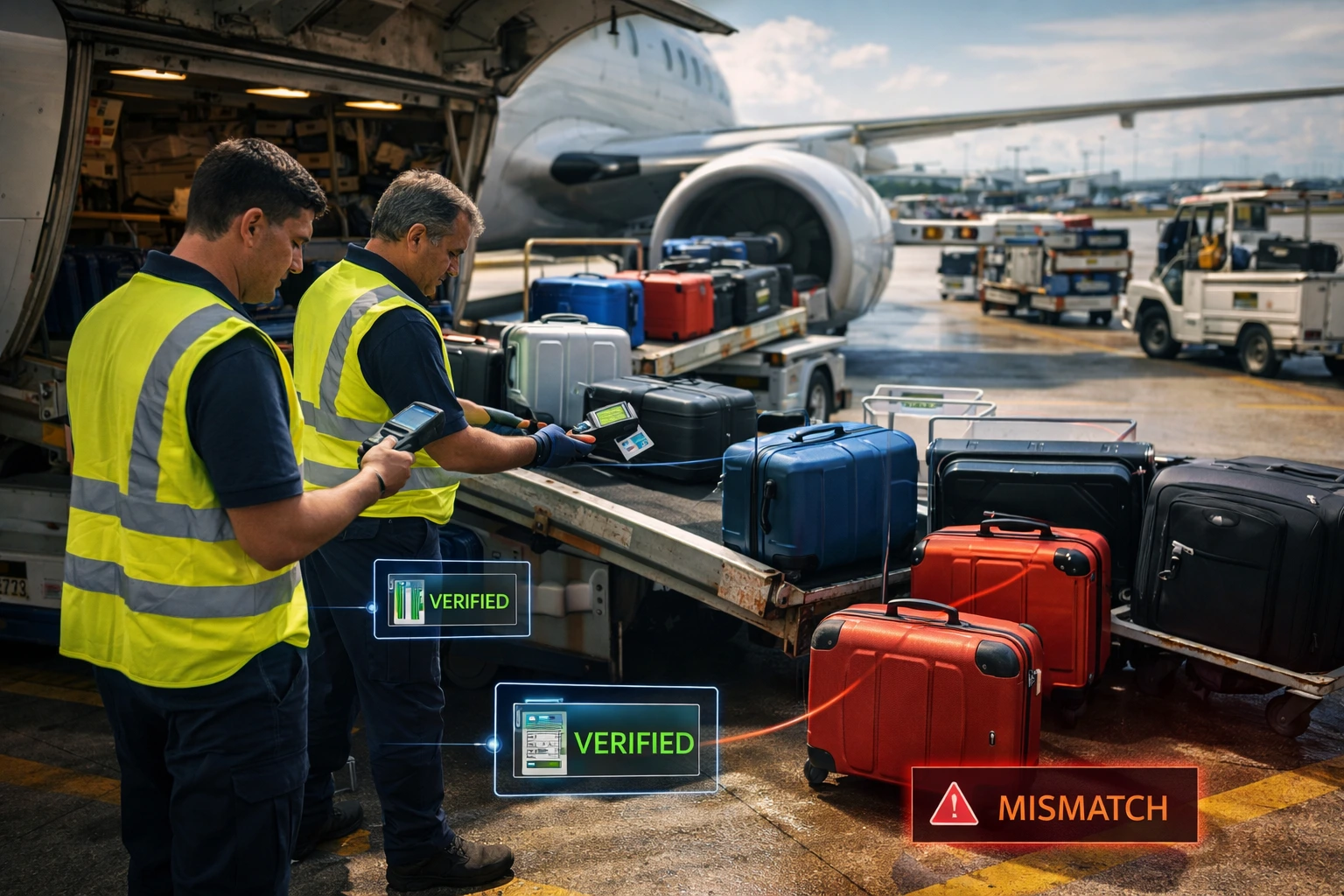
IATA Resolution 739 establishes one of the most critical security controls in global aviation: Positive Passenger–Baggage Matching (PPBM). It mandates that no checked baggage may be transported on an international flight unless the passenger is on board, unless that baggage has been subjected to additional security controls.
In practical terms, this means that every piece of baggage must be directly linked to a boarded passenger. If a passenger fails to board, their baggage must either be removed from the aircraft or re-screened and handled as unaccompanied baggage under strict security procedures.
This resolution forms the backbone of modern baggage security, ensuring that airlines maintain full control and accountability over every bag carried on an aircraft.
Origin and Adoption
Resolution 739 was introduced by the IATA Passenger Services Conference to formalize the requirement for passenger–baggage matching on international flights. It remains a mandatory industry standard and continues to be enforced globally across all IATA member airlines.
The resolution aligns closely with international aviation security frameworks, reinforcing the requirement that baggage must not travel independently of its owner unless subjected to additional security controls.
Purpose and Security Objective
The primary purpose of Resolution 739 is to eliminate the risk of unaccompanied baggage being transported without proper screening. This directly addresses historical security vulnerabilities where baggage was used to introduce threats onto aircraft.
By enforcing strict matching between passengers and their baggage, the resolution ensures that any discrepancy is immediately detected and addressed before departure.
This transforms baggage handling into a controlled security process rather than a purely logistical function.
Every bag must have a passenger—or a security clearance.
Core Process Flow
- Baggage Check-In: Each bag is tagged and linked to a passenger in the Departure Control System.
- Data Capture: Passenger and baggage data are recorded and synchronized within airline systems.
- Boarding Reconciliation: Final passenger boarding lists are compared against loaded baggage counts.
- Mismatch Detection: Any bag without a boarded passenger is flagged immediately.
- Action on No-Show Bags: Bags are either offloaded or re-screened as unaccompanied baggage.
- Final Clearance: Only matched or security-cleared baggage is allowed to depart.
Technical Implementation
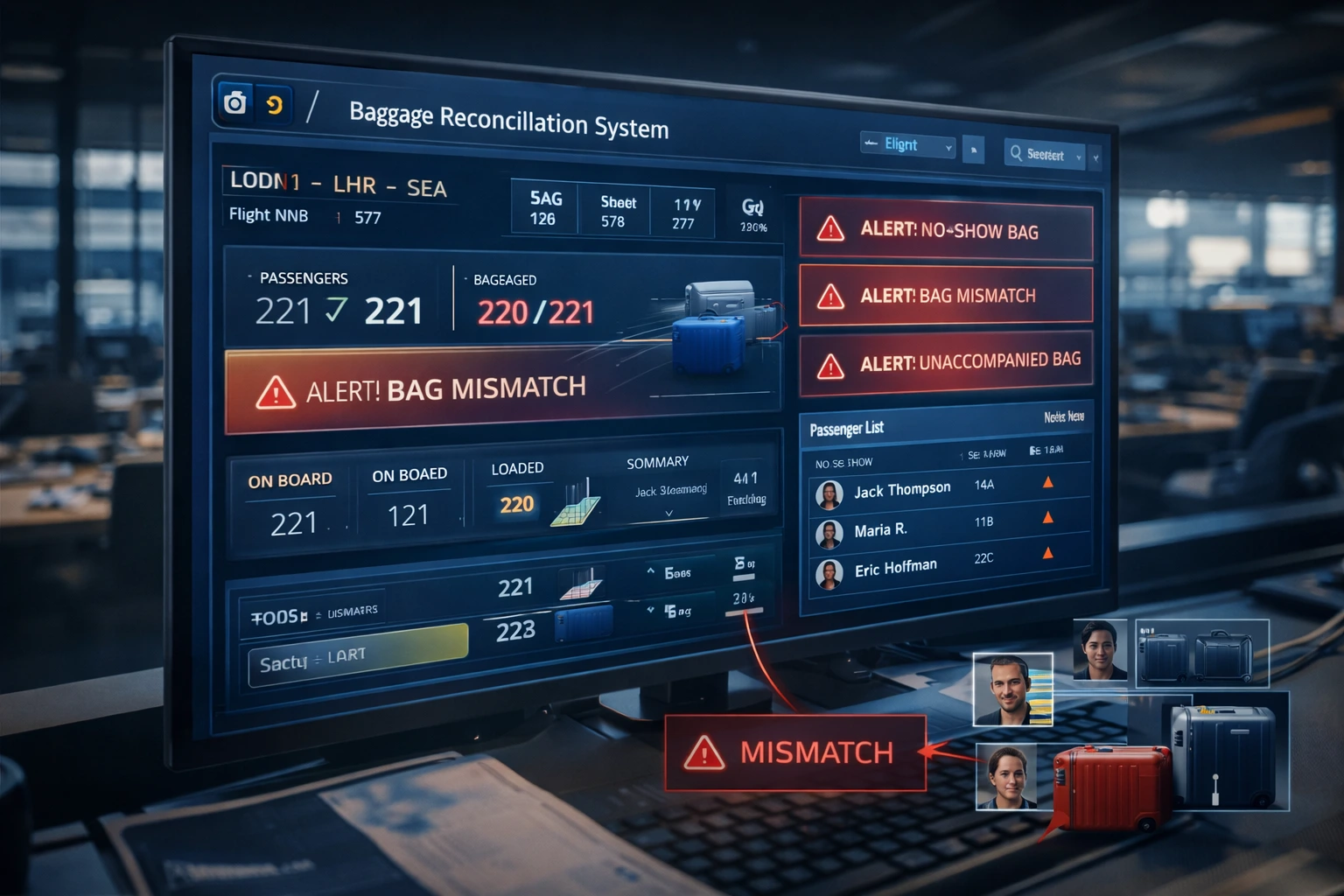
Resolution 739 is implemented through integrated airline systems, primarily the Departure Control System (DCS) and Baggage Reconciliation System (BRS). These systems work together to ensure real-time validation of passenger and baggage data.
Each bag is scanned at multiple points, including check-in, sorting, and loading. The system continuously compares the number of boarded passengers with the number of loaded bags, ensuring alignment before departure.
Any discrepancy triggers an alert, requiring immediate resolution before the aircraft is cleared for departure.
Implementation Guidelines
Airlines implement Resolution 739 through standardized operational procedures and automated systems. Ground staff are trained to verify baggage at each stage of the journey, using scanners and reconciliation tools to ensure accuracy.
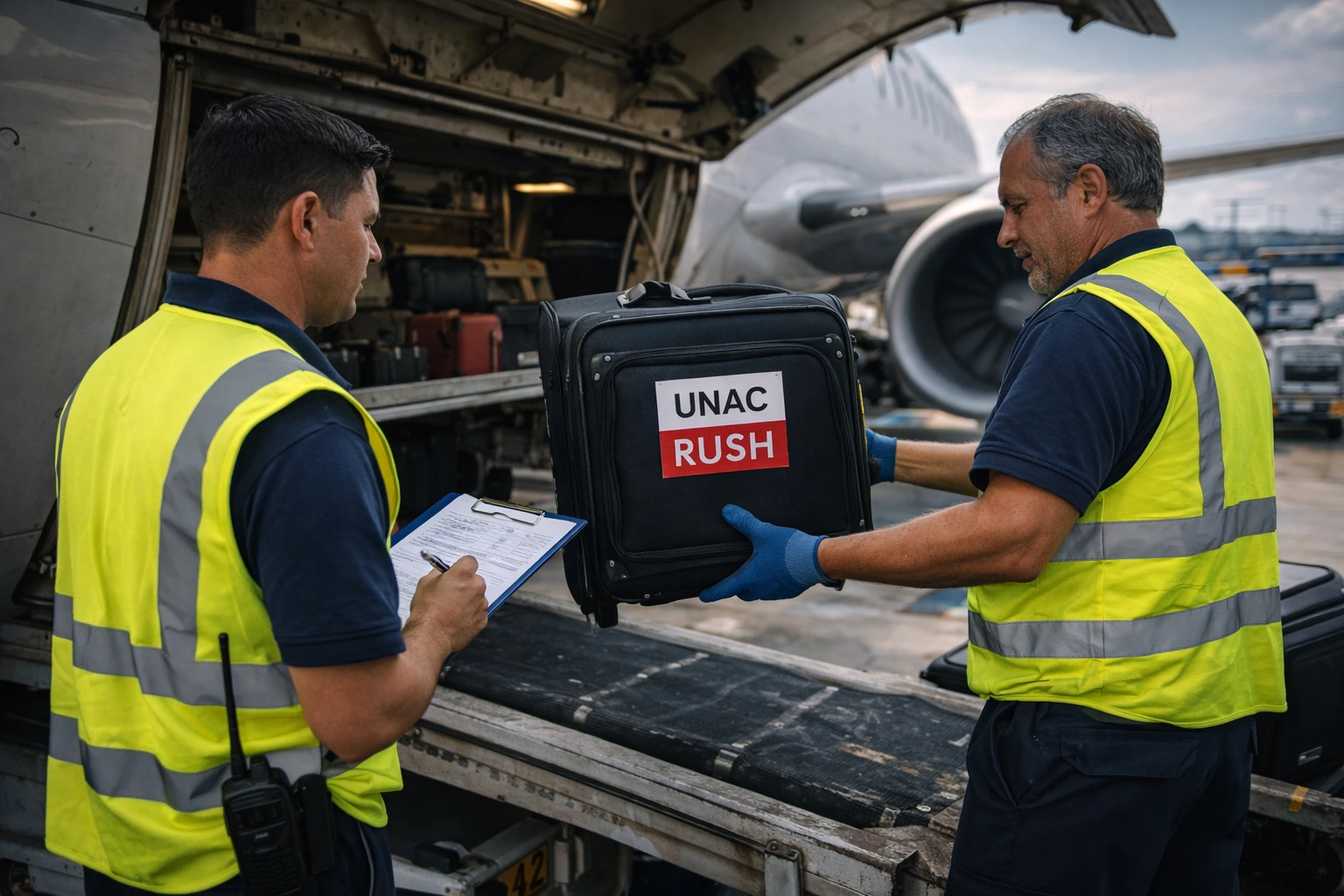
If a passenger fails to board, all associated baggage must be identified immediately. The bags are either removed from the aircraft or processed under unaccompanied baggage procedures, including additional security screening.
These procedures are applied consistently across all airports and interline partners, ensuring global compliance.
Operational Benefits
Resolution 739 provides both security and operational advantages. By ensuring that all baggage is accounted for, airlines reduce the risk of security incidents and improve overall operational control.
The resolution also enhances baggage handling efficiency by reducing errors, improving tracking accuracy, and minimizing delays caused by last-minute discrepancies.
Passengers benefit from increased confidence in airline security and more reliable baggage handling processes.
Auditability and Compliance
Resolution 739 is highly auditable due to its reliance on digital systems and structured workflows. Every baggage movement is recorded, and reconciliation reports provide clear evidence of compliance.
Airlines can demonstrate that each bag was either matched to a passenger or subjected to additional security controls. This creates a transparent audit trail for regulatory and operational oversight.
Real-World Use Cases
In real-world operations, Resolution 739 is applied during every flight departure. For example, if a passenger fails to board after checking in baggage, the system immediately flags the discrepancy.
Ground staff locate and remove the associated baggage from the aircraft before departure, ensuring compliance with security requirements. Alternatively, the baggage may be re-screened and processed as unaccompanied baggage.
This process ensures that no unchecked baggage is transported, maintaining the integrity of the entire baggage handling system.
Conclusion
Resolution 739 defines a fundamental rule in aviation security: baggage must always be linked to a passenger or subjected to strict security controls. By enforcing Positive Passenger–Baggage Matching, it ensures that every bag on an aircraft is accounted for and verified.
Its impact extends beyond security. It improves operational efficiency, strengthens accountability, and enhances passenger confidence. In a complex global aviation network, Resolution 739 provides a clear and enforceable standard that ensures safety and consistency across all operations.
